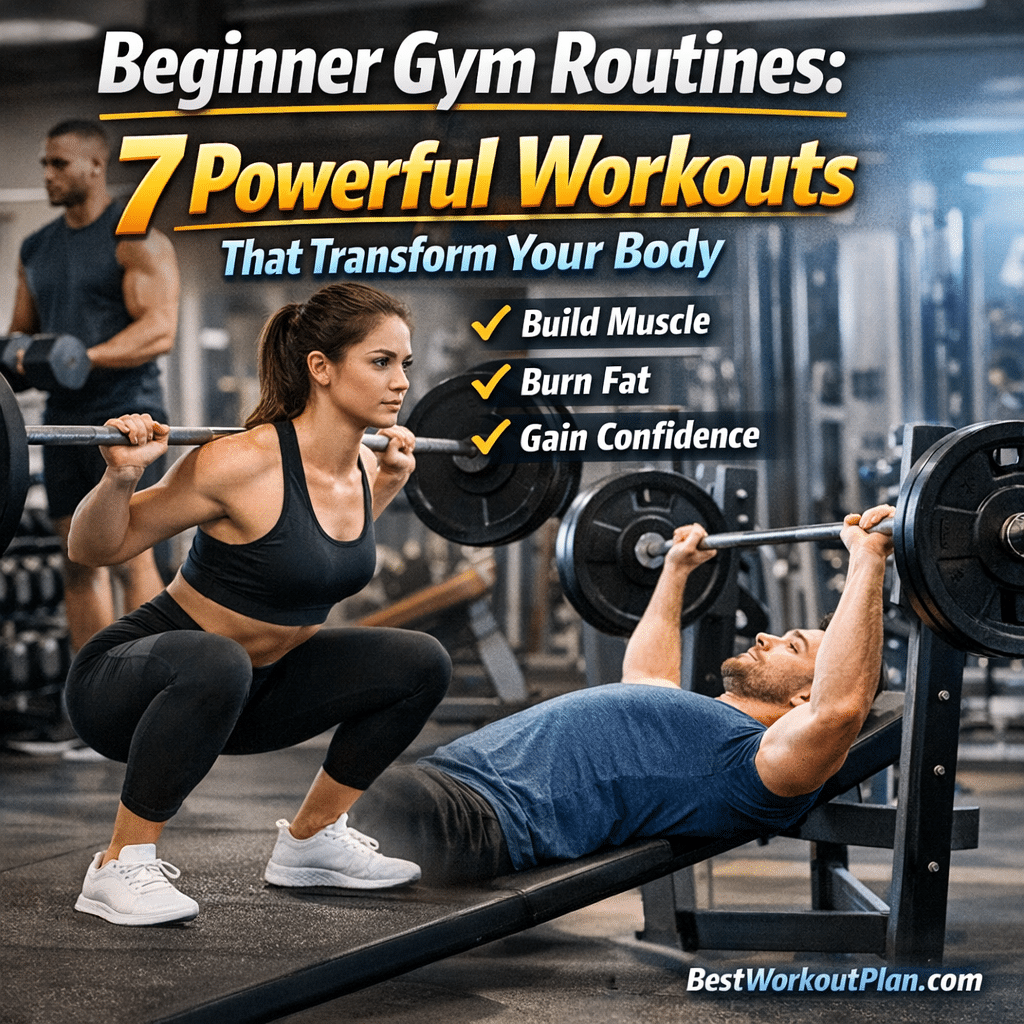
Starting your fitness journey can feel overwhelming, but finding the right beginner gym routines makes all the difference between success and frustration. Whether you’ve never touched a dumbbell or you’re returning after a long break, this comprehensive guide will set you on the path to achieving your fitness goals.
Beginner gym routines are specifically designed to help newcomers build a solid foundation of strength, learn proper exercise form, and develop consistent workout habits. Unlike advanced programs that assume prior experience, these routines prioritize safety, gradual progression, and sustainable results.
In this article, you’ll discover seven proven beginner gym routines that have helped thousands of people transform their bodies. We’ll cover everything from full-body workouts to split routines, ensuring you find the perfect fit for your schedule and goals.
Why Beginner Gym Routines Matter for Long-Term Success
Many newcomers make the mistake of jumping into advanced workout programs they find online. This approach often leads to injury, burnout, and disappointment. Beginner gym routines exist for crucial reasons that directly impact your long-term fitness success.
First, your muscles, tendons, and ligaments need time to adapt to new stresses. When you lift weights, you create microscopic tears in your muscle fibers. Your body repairs these tears, making the muscles stronger and larger. However, this adaptation process takes time.
Second, learning proper form is essential before adding heavy weights. Poor technique not only reduces the effectiveness of exercises but also dramatically increases injury risk. Beginner gym routines emphasize mastering movement patterns with lighter weights.
Third, your nervous system needs training too. The mind-muscle connection improves with practice. Beginners often struggle to activate the correct muscles during exercises. Starting with appropriate routines allows your brain to develop these neural pathways.
Understanding the Fundamentals Before You Start
Before diving into specific beginner gym routines, let’s establish some foundational knowledge that will maximize your results.
Progressive Overload: The Key to Growth
Progressive overload means gradually increasing the demands on your muscles over time. This principle drives all fitness adaptations. Without progressive overload, your body has no reason to change.
You can achieve progressive overload through several methods. Adding more weight is the most obvious approach. Increasing repetitions with the same weight works too. Performing more sets, reducing rest periods, or improving exercise form all contribute to progressive overload.
For beginners, focus primarily on adding repetitions before increasing weight. Once you can complete all prescribed reps with good form, add small amounts of weight. This approach ensures steady progress while minimizing injury risk.
Rest and Recovery
Your muscles don’t grow in the gym. They grow during rest periods between workouts. Beginner gym routines typically include rest days for good reason.
Sleep plays a critical role in recovery. Aim for seven to nine hours of quality sleep each night. During deep sleep, your body releases growth hormone, which facilitates muscle repair and growth.
Nutrition also affects recovery significantly. Consuming adequate protein supports muscle repair. Eating enough calories provides energy for workouts and recovery processes. We’ll discuss nutrition in more detail later.
Warming Up Properly
Every workout should begin with a proper warm-up. Warming up increases blood flow to your muscles, raises your body temperature, and prepares your joints for movement.
Start with five to ten minutes of light cardio. Walking on a treadmill, cycling, or using an elliptical machine works well. Your goal is to break a light sweat without exhausting yourself.
Follow cardio with dynamic stretches. Arm circles, leg swings, hip circles, and bodyweight squats prepare your body for the movements ahead. Save static stretching for after your workout.
Routine 1: The Full-Body Foundation Workout
This beginner gym routine works your entire body in each session. Full-body workouts are excellent for beginners because they allow you to practice movements frequently while providing adequate recovery time.
Frequency: Three days per week with at least one rest day between sessions.
Workout Structure
Squats – 3 sets of 8-10 reps
The squat is often called the king of exercises. It targets your quadriceps, hamstrings, glutes, and core. Begin with bodyweight squats to master the movement pattern. Progress to goblet squats holding a dumbbell, then eventually to barbell squats.
Stand with feet shoulder-width apart. Push your hips back and bend your knees as if sitting into a chair. Keep your chest up and your weight on your heels. Descend until your thighs are parallel to the ground, then drive through your heels to stand.
Bench Press – 3 sets of 8-10 reps
The bench press develops your chest, shoulders, and triceps. Beginners should start with dumbbells, which allow a more natural range of motion and help identify strength imbalances.
Lie on a flat bench with your feet flat on the floor. Hold dumbbells at chest level with palms facing forward. Press the weights up until your arms are extended, then lower slowly to the starting position.
Bent-Over Rows – 3 sets of 8-10 reps
Rows target your back muscles, including the latissimus dorsi, rhomboids, and rear deltoids. Strong back muscles improve posture and balance out chest development.
Hold a dumbbell in each hand. Hinge at your hips until your torso is nearly parallel to the ground. Keep your back flat and core engaged. Pull the weights to your ribcage, squeezing your shoulder blades together. Lower with control.
Overhead Press – 3 sets of 8-10 reps
The overhead press builds strong shoulders and triceps. It also engages your core for stability.
Stand with feet shoulder-width apart, holding dumbbells at shoulder height. Press the weights overhead until your arms are fully extended. Lower slowly to the starting position. Avoid arching your lower back excessively.
Romanian Deadlifts – 3 sets of 8-10 reps
Romanian deadlifts target your hamstrings and glutes while teaching the hip hinge pattern essential for many exercises.
Hold dumbbells in front of your thighs. Push your hips back while keeping your legs nearly straight. Lower the weights along your legs until you feel a stretch in your hamstrings. Drive your hips forward to return to standing.
Planks – 3 sets of 30-60 seconds
Planks strengthen your entire core, including your abs, obliques, and lower back. A strong core supports all other exercises and protects your spine.
Support yourself on your forearms and toes. Keep your body in a straight line from head to heels. Don’t let your hips sag or pike up. Breathe steadily throughout.
Routine 2: The Upper/Lower Split for Beginners
This beginner gym routine divides training into upper body and lower body days. The split allows slightly more volume per muscle group while maintaining adequate recovery.
Frequency: Four days per week (Upper, Lower, Rest, Upper, Lower, Rest, Rest)
Upper Body Day
Dumbbell Bench Press – 3 sets of 10-12 reps
Start with a weight that allows you to complete all repetitions with perfect form. Focus on controlling the weight throughout the entire range of motion.
Seated Cable Rows – 3 sets of 10-12 reps
Cable rows provide constant tension throughout the movement. Sit with your feet on the platform and knees slightly bent. Pull the handle to your midsection while keeping your back straight.
Dumbbell Shoulder Press – 3 sets of 10-12 reps
Seated shoulder presses reduce the stability demand, allowing beginners to focus on the pressing movement.
Lat Pulldowns – 3 sets of 10-12 reps
Lat pulldowns prepare you for pull-ups while building your back width. Pull the bar to your upper chest, focusing on driving your elbows down.
Dumbbell Bicep Curls – 2 sets of 12-15 reps
Curl the weights while keeping your elbows stationary at your sides. Avoid swinging or using momentum.
Tricep Pushdowns – 2 sets of 12-15 reps
Using a cable machine, push the handle down until your arms are fully extended. Keep your elbows pinned to your sides.
Lower Body Day
Goblet Squats – 3 sets of 10-12 reps
Hold a dumbbell vertically against your chest. This position helps maintain an upright torso and teaches proper squat mechanics.
Romanian Deadlifts – 3 sets of 10-12 reps
Focus on the hip hinge movement. Feel the stretch in your hamstrings at the bottom of each rep.
Walking Lunges – 3 sets of 10 reps per leg
Lunges develop single-leg strength and balance. Take controlled steps, ensuring your front knee tracks over your toes.
Leg Press – 3 sets of 10-12 reps
The leg press machine provides a safe environment to build leg strength. Position your feet shoulder-width apart on the platform.
Leg Curls – 3 sets of 12-15 reps
Leg curls isolate your hamstrings. Control the weight throughout the entire range of motion.
Calf Raises – 3 sets of 15-20 reps
Stand on the edge of a step with your heels hanging off. Rise onto your toes, then lower below the level of the step for a full stretch.
Routine 3: The Push/Pull/Legs Split
This beginner gym routine organizes exercises by movement pattern. Push days work muscles involved in pushing movements. Pull days target pulling muscles. Legs days focus on lower body.
Frequency: Three to six days per week depending on your schedule and recovery ability.
Push Day
Barbell Bench Press – 4 sets of 8-10 reps
Once you’ve mastered dumbbell pressing, progress to the barbell. Start with just the bar to learn the movement.
Incline Dumbbell Press – 3 sets of 10-12 reps
Incline pressing emphasizes your upper chest. Set the bench to approximately 30-45 degrees.
Dumbbell Shoulder Press – 3 sets of 10-12 reps
Standing shoulder press engages your core more than the seated version.
Cable Flyes – 3 sets of 12-15 reps
Flyes isolate your chest muscles. Focus on squeezing your chest at the peak contraction.
Lateral Raises – 3 sets of 12-15 reps
Lateral raises target the side deltoids. Use lighter weights and focus on form.
Overhead Tricep Extensions – 3 sets of 12-15 reps
Hold a dumbbell overhead with both hands. Lower it behind your head by bending your elbows, then extend back up.
Pull Day
Deadlifts – 4 sets of 6-8 reps
The deadlift is a foundational movement that builds total body strength. Start with light weight to perfect your form.
Pull-Ups or Lat Pulldowns – 3 sets of 8-12 reps
If you can’t do pull-ups yet, use the lat pulldown machine or assisted pull-up machine.
Barbell Rows – 3 sets of 8-10 reps
Barbell rows allow you to lift heavier weights than dumbbell variations.
Face Pulls – 3 sets of 15-20 reps
Face pulls strengthen your rear deltoids and rotator cuff muscles. They help prevent shoulder injuries and improve posture.
Dumbbell Curls – 3 sets of 10-12 reps
Alternate arms or curl both simultaneously.
Hammer Curls – 3 sets of 10-12 reps
Hammer curls target your brachialis muscle and forearms.
Legs Day
Barbell Squats – 4 sets of 8-10 reps
Once comfortable with goblet squats, progress to barbell back squats.
Romanian Deadlifts – 3 sets of 10-12 reps
Use a barbell for increased loading potential.
Leg Press – 3 sets of 10-12 reps
Vary your foot position to emphasize different muscles.
Bulgarian Split Squats – 3 sets of 10-12 reps per leg
Elevate your rear foot on a bench. This exercise develops single-leg strength and balance.
Leg Curls – 3 sets of 12-15 reps
Choose lying, seated, or standing variations based on available equipment.
Standing Calf Raises – 4 sets of 12-15 reps
Use a calf raise machine or Smith machine for added resistance.
Routine 4: The Machine-Based Beginner Workout
This beginner gym routine uses primarily machines. Machines provide stability and guide your movement path, making them ideal for complete beginners learning exercise mechanics.
Frequency: Three days per week
Full Body Machine Workout
Leg Press – 3 sets of 12 reps
The leg press machine is safer than free weight squats for absolute beginners.
Chest Press Machine – 3 sets of 12 reps
Machine chest press allows you to focus on pushing without worrying about balance.
Seated Row Machine – 3 sets of 12 reps
Pull the handles toward your midsection while keeping your back straight.
Shoulder Press Machine – 3 sets of 12 reps
Press overhead following the machine’s guided path.
Lat Pulldown – 3 sets of 12 reps
Pull the bar to your upper chest while keeping your torso upright.
Leg Curl Machine – 3 sets of 12 reps
Isolate your hamstrings with controlled repetitions.
Leg Extension Machine – 3 sets of 12 reps
Extend your legs against the resistance pad.
Cable Bicep Curls – 2 sets of 15 reps
Use the low pulley attachment.
Cable Tricep Pushdowns – 2 sets of 15 reps
Use the high pulley attachment.
Ab Crunch Machine – 3 sets of 15 reps
Control the movement and focus on contracting your abs.
Routine 5: The Strength-Focused Beginner Program
This beginner gym routine emphasizes building raw strength through compound movements and lower rep ranges.
Frequency: Three days per week
Day A
Squats – 5 sets of 5 reps
Focus on adding weight each session while maintaining form.
Bench Press – 5 sets of 5 reps
Use a spotter or safety bars when pressing heavy.
Barbell Rows – 5 sets of 5 reps
Pull explosively while lowering with control.
Day B
Squats – 5 sets of 5 reps
Yes, you squat every session. Squats build tremendous total body strength.
Overhead Press – 5 sets of 5 reps
Stand tall and brace your core throughout.
Deadlifts – 1 set of 5 reps
One heavy set of deadlifts provides sufficient stimulus.
Alternate between Day A and Day B each training session. Rest at least one day between workouts.
Routine 6: The Hypertrophy-Focused Beginner Program
This beginner gym routine targets muscle growth through moderate weights and higher repetitions.
Frequency: Four days per week (Upper/Lower split)
Upper Hypertrophy Day
Incline Dumbbell Press – 4 sets of 10-12 reps
Cable Rows – 4 sets of 10-12 reps
Flat Dumbbell Press – 3 sets of 12-15 reps
Lat Pulldowns – 3 sets of 12-15 reps
Lateral Raises – 3 sets of 15-20 reps
Face Pulls – 3 sets of 15-20 reps
Bicep Curls – 3 sets of 12-15 reps
Tricep Pushdowns – 3 sets of 12-15 reps
Lower Hypertrophy Day
Leg Press – 4 sets of 10-12 reps
Romanian Deadlifts – 4 sets of 10-12 reps
Hack Squats – 3 sets of 12-15 reps
Walking Lunges – 3 sets of 12 reps per leg
Leg Curls – 3 sets of 12-15 reps
Leg Extensions – 3 sets of 12-15 reps
Calf Raises – 4 sets of 15-20 reps
Routine 7: The Time-Efficient 30-Minute Workout
Not everyone has hours to spend at the gym. This beginner gym routine delivers results in just 30 minutes.
Frequency: Three to four days per week
Quick Full-Body Circuit
Perform each exercise back-to-back with minimal rest. After completing all exercises, rest two minutes and repeat for three total rounds.
Goblet Squats – 12 reps
Push-Ups – 10-15 reps (modify on knees if needed)
Dumbbell Rows – 10 reps per arm
Dumbbell Shoulder Press – 10 reps
Romanian Deadlifts – 12 reps
Plank – 30 seconds
This circuit trains your entire body efficiently while keeping your heart rate elevated.
Nutrition Guidelines for Beginner Gym Routines
Your nutrition significantly impacts your results from any beginner gym routine. Without proper fuel, your body cannot build muscle or recover effectively.
Protein Intake
Protein provides the building blocks for muscle growth. Aim for 0.7 to 1 gram of protein per pound of body weight daily. Good protein sources include chicken, fish, eggs, Greek yogurt, and legumes.
Spread your protein intake across multiple meals. Consuming 20-40 grams of protein per meal optimizes muscle protein synthesis.
Calorie Balance
Your calorie intake determines whether you gain or lose weight. To build muscle, eat slightly more calories than you burn. To lose fat, eat slightly fewer calories than you burn.
Track your food intake for a few weeks to understand your current eating habits. Make gradual adjustments based on your results.
Carbohydrates and Fats
Carbohydrates provide energy for your workouts. Include complex carbs like oatmeal, rice, and sweet potatoes in your diet.
Healthy fats support hormone production and overall health. Include sources like avocados, nuts, olive oil, and fatty fish.
Hydration
Water is essential for performance and recovery. Drink at least half your body weight in ounces of water daily. Increase intake on training days.
Common Mistakes to Avoid in Beginner Gym Routines
Learning from others’ mistakes accelerates your progress. Avoid these common pitfalls that derail many beginners.
Ego Lifting
Using weights too heavy for your current ability compromises form and increases injury risk. Check your ego at the door. Focus on perfect form with lighter weights before progressing.
Program Hopping
Switching programs every few weeks prevents progress. Stick with one beginner gym routine for at least 8-12 weeks before evaluating results and making changes.
Neglecting Recovery
More is not always better. Overtraining leads to fatigue, decreased performance, and injury. Follow your program’s prescribed rest days.
Skipping Warm-Ups
Jumping straight into heavy lifting without warming up invites injury. Always spend 5-10 minutes preparing your body.
Ignoring Nutrition
You cannot out-train a bad diet. Prioritize nutrition alongside your training for optimal results.
Comparing Yourself to Others
Everyone starts somewhere. Focus on your own progress rather than comparing yourself to more experienced gym-goers.
Tracking Your Progress
Monitoring your progress keeps you motivated and informed. Track these metrics throughout your fitness journey.
Workout Logs
Record your exercises, weights, sets, and reps for each workout. This data shows your strength progression over time.
Body Measurements
Take measurements of your chest, waist, arms, and legs monthly. These numbers reveal changes that the scale might miss.
Progress Photos
Take photos from the front, side, and back monthly. Visual changes often occur gradually and go unnoticed without photographic evidence.
Performance Metrics
Track improvements in strength, endurance, and exercise form. Celebrate personal records and milestones.
When to Progress Beyond Beginner Gym Routines
How do you know when you’ve outgrown beginner programming? Several signs indicate readiness for intermediate training.
You’ve consistently followed a beginner gym routine for at least six months. Your strength gains have slowed despite proper nutrition and recovery. You can perform all exercises with excellent form. You understand training principles and can modify workouts appropriately.
At this point, consider transitioning to intermediate programming with greater volume, intensity, or frequency.
Final Thoughts on Starting Your Fitness Journey
Beginning your fitness journey with the right beginner gym routines sets you up for lifelong success. Remember that consistency beats perfection. Showing up regularly matters more than having the perfect workout.
Start with whichever routine fits your schedule and preferences. Master the basics before adding complexity. Prioritize form over weight. Be patient with your progress.
Your body is capable of incredible transformations. These beginner gym routines provide the roadmap. Now it’s up to you to take the first step.
The gym can feel intimidating initially, but every experienced lifter was once a beginner too. Embrace the learning process, celebrate small victories, and trust that your efforts will pay off.
Choose one of these beginner gym routines and commit to it for the next 12 weeks. Track your progress, adjust your nutrition, and watch your body transform. Your future self will thank you for starting today.